
DHAN-VYAPAR

Apple Supplier Pegatron Said to Be in Talks With Tata to Sell Its Only India iPhone Plant

[ad_1]

Pegatron is in advanced talks to hand over control of its only iPhone manufacturing facility in India to the Tata Group, said two sources with direct knowledge, marking the Taiwanese firm’s latest scale back of its Apple partnership.

Under the deal, which has received the backing of Apple, Tata plans to hold at least a 65 percent stake in a joint venture that will operate the Pegatron plant near Chennai city in the southern Indian state of Tamil Nadu, with the Taiwanese firm providing technical support and holding the rest, one of the sources said.

Tata, one the largest conglomerates in India, will operate the joint venture through its Tata Electronics unit, the second source said.

The Pegatron India factory has around 10,000 employees and makes 5 million iPhones annually. It is the last such facility operated by the firm after it forfeited control of an iPhone plant in China last year to rival Luxshare in a $290 million (roughly Rs. 2,415 crore) deal.

Tata and Pegatron did not respond to emailed requests for comments. Apple declined to comment. The sources did not share financial details of the ongoing negotiations.

Apple is increasingly looking to diversify its supply chain beyond China amid geopolitical tensions between Beijing and Washington. For India’s Tata, the Chennai Pegatron plant will bolster its iPhone manufacturing plans.

Tata already operates an iPhone assembly plant in the neighbouring southern state of Karnataka, which it took over from Taiwan’s Wistron last year, and is also building another in Hosur in Tamil Nadu, where Pegatron is likely to emerge as its joint venture partner.

Pegatron has for months also been building another iPhone factory at its Chennai campus, and the Tata deal talks include taking over that facility as well, the first source said.

The talks between Tata and Pegatron for the factory are expected to close in six months and will see all of the Pegatron India employees move to the joint venture entity, the first source added.

Apple’s iPhone contract manufacturers in India currently include Tata, Pegatron and Foxconn. Tata is key to Apple’s growing ambitions in India, which analysts estimate will contribute 20-25 percent of total iPhone shipments this year, from 12-14 percent last year.

The reasons for Pegatron’s gradual withdrawal from its Apple business, including in India, were not known. Last year, Pegatron said the China plant deal was done to raise capital to “optimise its business”.

© Thomson Reuters 2024


Apple launched the iPad Pro (2022) and the iPad (2022) alongside the new Apple TV this week. We discuss the company’s latest products, along with our review of the iPhone 14 Pro on Orbital, the Gadgets 360 podcast. Orbital is available on Spotify, Gaana, JioSaavn, Google Podcasts, Apple Podcasts, Amazon Music and wherever you get your podcasts.
Affiliate links may be automatically generated – see our ethics statement for details.

[ad_2]

BMW maintains sales spurt in 2024, reports 51% growth in Q1 car deliveries

[ad_1]

  • BMW models like the X7, X3 and X1 are the hot favourites in India even as the company looks to further expand its all-electric offerings here.
BMW
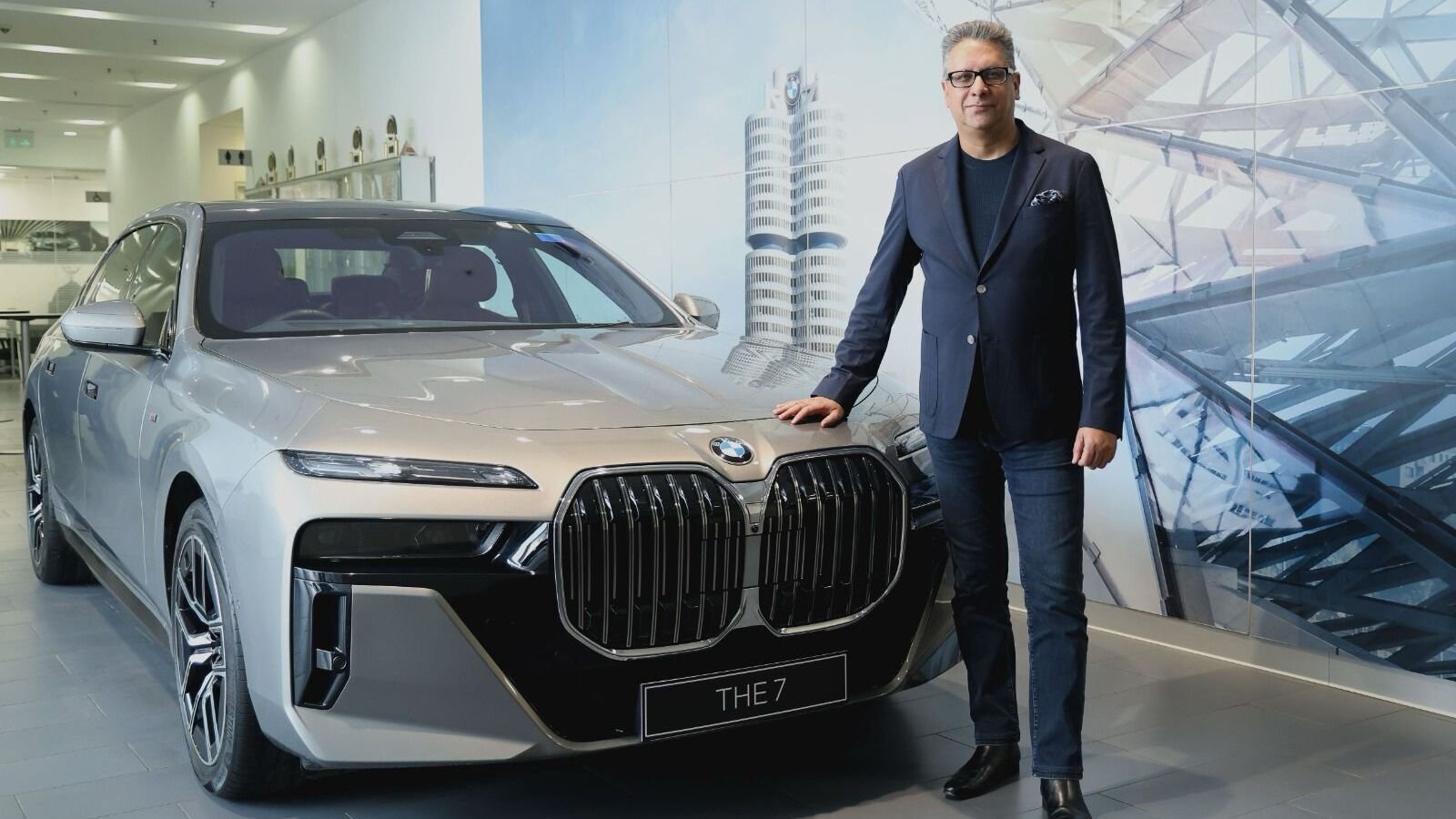
BMW plans to launch 19 products, including cars and motorcycles in India in CY2024. Seen here is BMW Group India President Vikram Pawah.

BMW Group India on Monday informed it has opened its 2024 innings on a strong note with 3,680 car units delivered in the first quarter, up by 51 per cent from the corresponding period of last year. Additionally, 1,810 motorcycles under BMW Motorrad were sold in Q1 of this year.

The luxury car market in India has been growing and while it may still be significantly smaller than what the segment is in China and western countries, the signs remain positive. BMW says it has manged to place itself in a position of strength and after what was a record 2023 for the German manufacturer, the early signs in 2024 is heartening for it.

What’s powering BMW in India?

BMW says the robust demand for its Sports Activity Vehicles (also referred to as SUVs or Sports Utility Vehicles) has continued into 2024. Models like the BMW X7, BMW X3 and BMW X1 are sold out.

The company claims that there is also solid traction for the range-topping models like BMW 7 Series, BMW i7 and BMW X7 while in the sedan portfolio, the BMW 3 Series is sold out as well. “Our firm leadership in the luxury electric car market remains undisputed thanks to the most diverse range of products,” said Vikram Pawah, President, BMW Group India. “Our key car models are at the top of their game and with significant new launches in the pipeline, we will raise the heat in luxury market.”

What’s charging the BMW electric portfolio?

The electric car market in India is small. The luxury electric car market is miniscule. But even in this tiny space, BMW claims to enjoy a position of strength with models like BMW i7, BMW iX, BMW i4, BMW iX1 and MINI SE on the brochure. The BMW i7, in fact, is the largest-selling luxury electric car.

Also watch: BMW iX electric SUV launched in India: First impressions

Next up on the horizon is the BMW i5 with the company promising a launch that is ‘coming soon.’

BMW or what?

A number of luxury car makers compete for the attention of India’s fast-growing affluent class of buyers that are either looking for their first luxury cars or wanting to add these to their garage. BMW has a strong game in the country and competes closely with Mercedes-Benz, the current market-leader in the luxury space. In the fray is also Audi that has a lineup that consists of petrol engine-powered as well as fully-electric models. Then there are the likes of Volvo and Jaguar Land Rover.

All of these manufacturers offer an array of products – some have a more diverse portfolio than others. And interestingly, all of these brands have at least one fully-electric model in the India lineup.

The likes of BMW, Mercedes-Benz and Audi also offer high-performance car models for a niche set of buyers although these models are brought in via the import route and in limited numbers.

First Published Date: 08 Apr 2024, 13:03 PM IST

[ad_2]

Go First Airline received 60 more days from NCLT to find out resolution

[ad_1]

NCLT Extends Moratorium: कर्ज में फंसकर डूब चुकी गो फर्स्ट एयरलाइन (Go First Airline) को एक और लाइफलाइन दी गई है. नेशनल कंपनी लॉ ट्रिब्यूनल (NCLT) ने सोमवार को एयरलाइन का मोरेटेरियम 60 दिन के लिए बढ़ा दिया गया है. इससे गो फर्स्ट को कॉरपोरेट इनसॉल्वेंसी रेजोलुशन प्रोसेस पूरा करने का और समय मिल जाएगा. एयरलाइन ने हाल ही में कोर्ट को जानकारी दी थी कि उसने 2 रेजोलुशन प्लान फाइनल कर दिए हैं. ट्रिब्यूनल ने एयरलाइन को आदेश दिया है कि वह रेजोलुशन प्लान को जल्द से जल्द फाइनल कर दे. अब कंपनी के पास निर्णय लेने के लिए 3 जून तक का समय है.

कमेटी ऑफ क्रेडिटर्स ने दे दी थी मंजूरी 

ट्रिब्यूनल ने बताया कि गो फर्स्ट एयरलाइन के स्टेकहोल्डर्स के हितों को ध्यान में रखते हुए यह फैसला लिया गया है. गो फर्स्ट एयरलाइन को रेजोलुशन प्रोसेस पूरा करने के लिए अब तक 330 दिन का समय दिया जा चुका है. रेजोलुशन प्रोफेशनल ने एक्सटेंशन की मांग करने के लिए याचिका दाखिल की थी. इसे कमेटी ऑफ क्रेडिटर्स ने 29 मार्च को मंजूरी दी थी. इस कमेटी में सेंट्रल बैंक ऑफ इंडिया, बैंक ऑफ बड़ौदा और आईडीबीआई बैंक शामिल हैं. 

जल्द समाधान निकलने की उम्मीद 

इनसॉल्वेंसी एंड बैंकरप्सी कोड (IBC) के अनुसार, एनसीएलटी अगर चाहे तो 330 दिन से ज्यादा का समय भी दे सकता है. हालांकि, ऐसा माना जा रहा है कि गो फर्स्ट एयरलाइन केस में एनसीएलटी अब और एक्सटेंशन देने के मूड में नहीं है. हालांकि, 2 रेजोलुशन प्लान होने के चलते ऐसी उम्मीद जताई जा रही है कि इन 60 दिनों में गो फर्स्ट एयरलाइन कोई न कोई समाधान निकाल लेगी. 

स्पाइसजेट और स्काई वन ने दिया है प्रस्ताव 

दरअसल बंद पड़ी गो फर्स्ट एयरलाइन को खरीदने के लिए स्पाइसजेट (SpiceJet) के अजय सिंह (Ajay Singh) और बिजी बी (Busy Bee) के अलावा शारजाह की कंपनी स्काई वन एविएशन (Sky One Aviation) ने भी प्रस्ताव दिया है. 

3 मई से ही बंद पड़ी है एयरलाइन 

वाडिया ग्रुप के नेतृत्व वाली एयरलाइन ने 2 मई, 2023 को इनसॉल्वेंसी फाइल की थी. एयरलाइन ने अपना परिचालन 3 मई, 2023 को बंद कर दिया था. कंपनी ने अपने फेल होने का कारण प्रैट एंड व्हिटनी (Pratt & Whitney) के खराब इंजनों को बताया था. तभी से एयरलाइन बंद पड़ी है और उसे कई कानूनी संकटों का सामना करना पड़ रहा है.

ये भी पढ़ें 

Tata Group: ताइवान से सेमीकंडक्टर बनाने में माहिर लोगों को भारत लाएगी टाटा इलेक्ट्रॉनिक्स, जल्द होगा रोडशो

[ad_2]

Regulating index providers is the need of the hour

[ad_1]

Trying to “beat the market” is taking a backseat today as investors seem to find “replicating the market returns” easier and more intuitive. In his seminal paper on ‘efficient market hypothesis’, Nobel laureate Eugene Fama’s theorem posits that it is not possible to beat the market as all information is fully reflected in the stock prices, and neither technical analysis nor fundamental analysis can help one achieve more than market returns on a sustained basis. However, it is possible to achieve market returns by passive investing.

Passive investing involves mimicking the indices and replicating the index components in the investment portfolio. Globally, the assets under management (AUM) under passive funds is growing more rapidly than actively-managed funds and has surpassed the active AUM. In India, passive industry AUM is over 6 trillion as on 30 November 2022 and, though still less than active AUM, is fast growing. Besides passive funds, the world of investing has several index-linked products like ETFs (Exchange Traded Funds), and index-linked derivatives. Since, by definition, passive investing involves virtually delegating the job of picking stocks to index providers, they have become akin to fund managers. More than that, the very concept of ‘market returns’ is what the broad market index shows it is. Indices don’t just act as barometers of market performance and as guiding beacons for passive investing, they also serve as benchmarks to gauge the effectiveness of active investment strategies, answering the investors’ question, “Have they beat the market?”

With the growing importance of indices, several questions arise: how reliable are the indices as measures of market performance? Are they constructed without bias? Who constructs and administers them, and most importantly, are they regulated? Indices in India are designed and administered by index providers set up as subsidiaries of the stock exchanges, like NSE Indices Limited, which operates Nifty 50 among other indices, or as a joint venture between a stock exchange and index providers, like Asia Index Private Ltd, which administers Sensex among others. Besides the broad market indices, the index providers also provide other types of indices like thematic indices and sectoral indices, and provide bespoke indices too.

Bringing the index providers under the regulatory fold has been on the cards for sometime now. Questions on integrity of the benchmark administration process came to the fore during the LIBOR (London Inter-Bank Offered Rate) scandal in 2012, which prompted IOSCO (International Organisation of Securities Commissions) to publish a report in July 2013 proposing a framework of principles for financial benchmarks.

Based on IOSCO’s framework, Sebi issued a discussion paper in 2017 to introduce a code of conduct for index providers, and then another in 2020. Then in 2022, a working group presented its recommendations to the Secondary Market Advisory Committee. This resulted in a consultation paper for introducing a full-fledged regulatory framework, based on which Sebi notified on 8 March the regulations which will take effect in 180 days.

While the consultation paper proposed that Sebi registration must be taken by Indian and foreign index providers if the users of the indices are located in India, irrespective of dealing with Indian or global assets, the final regulations are made applicable only to Indian and foreign index providers administering ‘significant indices’ comprising of securities listed on Indian exchanges for Indian users. Registration shall be considered based on fulfilment of fit and proper criteria, minimum requirements for net worth, among other criteria. The 2022 paper, while duly acknowledging that there is transparency to the extent that the methodology and composition are disclosed in the providers’ websites, points out that there is room for discretion, which increases the susceptibility to governance challenges like conflicts of interest and manipulation. Further, news of inclusion or exclusion of stocks in the indices is price-sensitive and, if not properly handled, could lead to insider trading. The regulations provide for mandatory adherence to IOSCO’s principles, constitution of oversight committee to review index design, and powers of Sebi to initiate special audit, among others. Bringing index providers under the regulatory ambit is timely and crucial, even as passive investing is becoming actively preferred.

Usha Ganapathy Subramanian is a practising company secretary in Chennai.

[ad_2]

Sony Announces Summer Promo Offer in India, Select PS5 Models to Get Up to Rs. 13,000 Discount

[ad_1]

Sony has announced a limited period promotional offer on select older PlayStation 5 models in India. The “Summer Promo” offer will apply on the standard PS5, bringing a discount of up to Rs. 13,000 on the console. The discount, announced in the wake of the launch of the slimmer version of PS5 in India, will start on April 10. The disc edition of the standard PS5, which launched in India in February 2021, is currently priced at Rs. 54,990.

The “Summer Promo” offer will only cover the disc version of the standard PS5 with model number CFI -1208A01R. The offer starts April 10 and will be active till April 30, or till stocks of the console model last. The standard PS5 will get a discount of up to Rs. 13,000. Sony India confirmed to Gadgets 360 that the discount will apply variably to applicable products and the offer will be valid on disc edition PS5 bundles, as well.

The discounts will be live on Amazon, Blinkit, Croma, Flipkart, Reliance, Sony Centre, Vijay Sales and other participating retails, Sony said. It’s also worth noting that the promotional offer will not include the Digital Edition of the older version console and the newly launched PS5 slim.

The slim version of the PS5, first announced in October last year, went on sale in India last week. The latest discount is likely aimed at clearing out stocks of the older model of the console.

The PS5 slim, which is thinner and lighter than the standard PS5, comes in at the same price of Rs. 54,990 for the disc edition and Rs. 44,990 for the digital edition. The new slim variant of the console is also available for 10-minute delivery in select cities in India via Blinkit.

The PS5 has sold over 50 million units since its launch in November 2020, but sales of the console have been slowing down, Sony confirmed at its quarterly earnings call earlier this year. The company had said it was set to miss its PS5 sales target for fiscal year 2023, expecting to sell four million units fewer than its 25-million goal for the year.


Affiliate links may be automatically generated – see our ethics statement for details.

[ad_2]

PV retail grows 8.45% in FY24, two-wheeler numbers surge by 9.30%: FADA

[ad_1]

PV and two-wheeler retail sales surged across India in FY24 compared to their respective levels in FY23, despite challenges like price hikes, inflatio

Cars
PV and two-wheeler sales surged across India in FY24 compared to their respective levels in FY23, despite challenges like price hikes, inflation etc.

Passenger vehicles in India registered a retail sale number of 39,48,143 units in the last fiscal that concluded in March 2024, up by 8.45 per cent compared to 36,40,399 units sold in FY23, revealed Federation of Automobile Dealers Associations (FADA), the apex national body of automobile retail industry in the country. It also stated that in March 2024, the passenger vehicle segment in India recorded a wholesale number of 322,345 units, registering a 6.17 per cent decline from 343,527 units posted in March 2023.

The official statement from FADA further revealed that the Indian passenger vehicle market witnessed a retail sales slump of 2.35 per cent last month, compared to February 2024, when it recorded 330,107 units. The organisation attributed this downturn to heavy discounting and selective financing. Speaking about the year-on-year growth recorded in FY24, the organisation said that it was an all-time high sales surge propelled by improved availability of vehicles alongside a mix of models and high demand for SUVs. The statement further revealed that SUVs contributed 50 per cent of total PV sales in the last fiscal.

Speaking on the sales performance, FADA President Manish Raj Singhania said that for the passenger vehicle segment, the last fiscal was a milestone year. “For the PV segment, FY24 was a milestone year, achieving an 8.45% YoY growth and reaching an all-time high. Factors such as improved vehicle availability, a compelling model mix and the launch of new models played pivotal roles. Enhanced supply dynamics, strategic marketing efforts, ever-expanding quality road infrastructure and strong demand in the SUV segment, now holding a 50 per cent market share, significantly contributed to this success,” he added.

Two-wheeler sales surged 9.30 per cent

Two-wheeler sales in India surged by 9.30 per cent in the last financial year, compared to the previous fiscal. In FY24, two-wheelers sold 1,75,17,173 units across India, up from 1,60,27,411 units recorded in the previous financial year. FADA has stated that despite the economic concerns, election uncertainties and intense competition, the two-wheeler segment showcased strategic evolution, especially in the premium and electric vehicles.

The organisation attributed this growth in retail sale numbers for the two-wheelers to enhanced availability of models, the introduction of new motorcycles and scooters in both ICE and electric vehicle segments, an upbeat market sentiment, and strategic premium segment launches.

The electric two-wheelers’ market share jumped to 9.12 per cent for the first time, stated FADA. It claimed that the expiration of the FAME 2 subsidy on 31st March resulted in a notable increase in EV sales as consumers rushed to buy electric vehicles before the expiry of the scheme.

Speaking about the two-wheeler sales, FADA President said that in FY24, the segment saw a nine per cent growth, driven by a rich mix of factors including enhanced model availability, new product introductions, and positive market sentiment, further augmented by special schemes and the rural market’s recovery from Covid. “The growth in EVs and strategic launches in premium segments also played a critical role, overcoming challenges such as supply constraints and heightened competition,” he added.

First Published Date: 08 Apr 2024, 10:50 AM IST

[ad_2]

Stock Market Record High and Sensex at Alltime new historical at 74555 level

[ad_1]

Stock Market Record: शेयर बाजार की आज रिकॉर्ड हाई पर ओपनिंग हुई है और सेंसेक्स ऑलटाइम हाई पर खुला है. बीएसई का सेंसेक्स 307.22 अंक या 0.41 फीसदी की ऊंचाई के साथ 74,555.44 पर ओपन हुआ है. एनएसई का निफ्टी 64.65 अंक या 0.29 फीसदी की बढ़त के साथ 22,578.35 के लेवल पर खुला है. 

प्री-ओपनिंग में कैसा रहा बाजार

प्री-ओपनिंग में बीएसई का सेंसेक्स 357 अंक चढ़कर 0.48 फीसदी की तेजी के साथ 774605 के लेवल पर ट्रेड कर रहा था. एनएसई का निफ्टी 67.75 अंक या 0.30 फीसदी चढ़कर 22581 के लेवल पर ट्रेड कर रहा था. 

खबर में अपडेट जारी है

[ad_2]

How to harvest tax-free capital gains from stocks and equity oriented mutual funds?

[ad_1]

You have only two trading days to do this to pocket 1 lakh tax-free gains from stocks and equity oriented mutual funds.

With the BSE Sensex rising 26% and the midcap and smallcap indices shooting up more than 60% in the past one year, most stock investors saw their portfolio grow during the financial year. Long-term capital gains from stocks and equity oriented mutual funds are now taxed at 10%. However, under section 112A, long-term capital gains of up to 1 lakh from equity and equity oriented mutual funds are tax free in a financial year.

If you are sitting on handsome profits, it may be a good idea to optimise your tax by harvesting some of the gains. This is true even for long-term investors. Instead of accumulating long-term capital gains for several years and booking profits at one go, they can reduce their tax liability by booking profits of up to 1 lakh every year.

Here’s how it works. Suppose you are holding 500 shares of NTPC bought more than one year ago at 150. The current price is 330, which means your investments have grown by 80,000. If you sell these 500 shares before 31 March, you will book a profit of 80,000 for the financial year 2023-24. This is tax free money. After these stocks have gone out of your demat account, you can buy them back again. Assuming you buy 500 shares back at 335, your cost of acquisition will now get reset at a higher level for tax purposes.

What happens if you don’t sell now and continue to hold them for the long term. Let us assume NTPC stock price goes up and you sell the shares at a higher price of 500. In that case, the 1.75 lakh long-term gains you will get will not be completely tax free. Only 1 lakh will be tax free while the remaining 75,000 will be subject to 10% tax. However, if you harvest the 80,000 gains now and buy back NTPC shares, you will be able to get the tax free gains again when you sell at 500.

The same can be done for mutual funds as well. If your investments have completed one year, just sell the equity funds and buy them back again. If you want to do this with the same stock, you must wait for the shares to go out of your demat account before buying them back. In case of mutual funds, wait for the sale transaction to be complete before buying the mutual fund scheme again.

Some investors may not have been lucky with their stock and fund investments. They should book losses and adjust them against gains from other investments. Losses in one investment can be adjusted against gains from other investments. However, keep in mind that long-term capital losses can be set off only against long-term capital gains. But short-term capital losses can be set off against short-term or long-term capital gains. It is important to keep an eye on the calendar when you do this. 

Make sure you sell shares and mutual fund units that were bought more than a year ago. Only long term capital gains are eligible for the 1 lakh tax-free limit. Short-term gains on shares and units bought less than a year back will be subject to 15% tax.

Also, make sure that you haven’t already breached the 1 lakh tax free limit through other transactions. For this, you must know your capital gains for the year before you get into this. Log on to your mutual fund or brokerage house and get a capital gains statement. Mutual fund transfer agency Computer Age Management Services provides a consolidated statement across all funds. Also check your Annual Information Statement on the income tax portal to see if you have made other long term capital gains during the year. 

This tax harvesting strategy does not imply that you reduce your allocation to equities. The allocation would reduce only if you sell your stocks and equity funds but don’t buy them back. Harvesting of gains only involves selling off some stocks and funds and buying the same stocks a day or two later. Your asset allocation will not change.

Sudhir Kaushik, CEO of tax filing and financial wellness portal TaxSpanner.com


Unlock a world of Benefits! From insightful newsletters to real-time stock tracking, breaking news and a personalized newsfeed – it’s all here, just a click away! Login Now!

Catch all the Business News, Market News, Breaking News Events and Latest News Updates on Live Mint.
Download The Mint News App to get Daily Market Updates.

More
Less

Published: 08 Apr 2024, 08:55 AM IST

[ad_2]

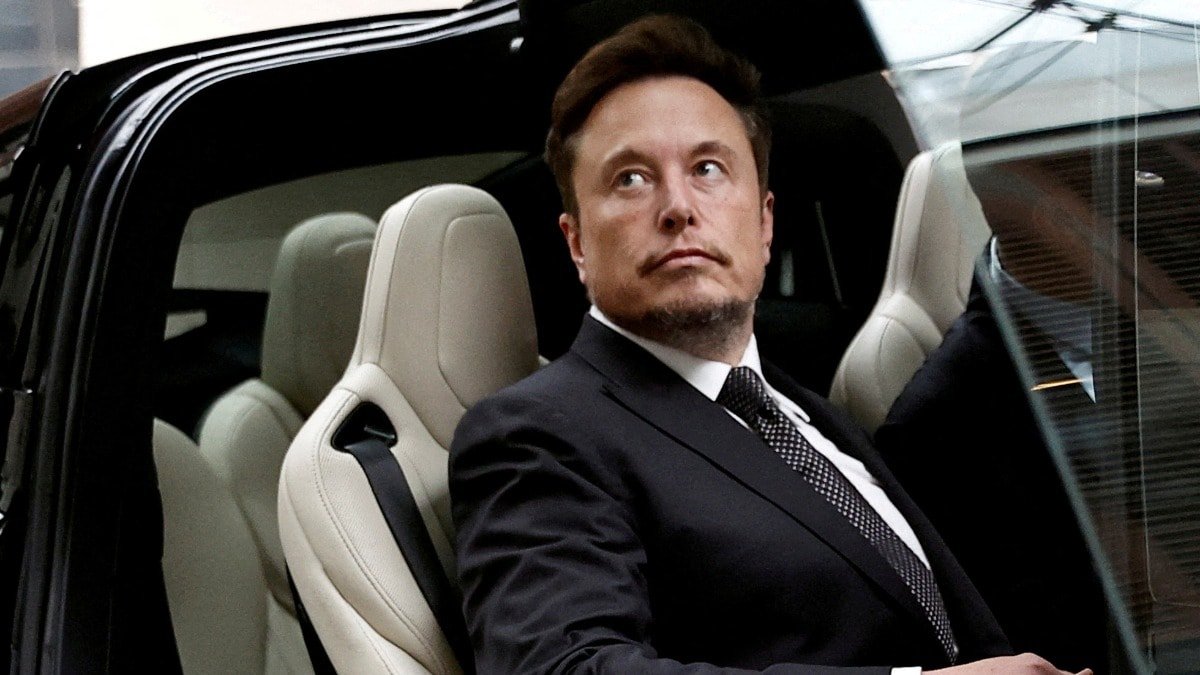
Elon Musk Denies Report Tesla Is Scrapping Less-Expensive Electric Car

[ad_1]

Tesla Inc. shares pared a steep drop in intraday trading after Chief Executive Officer Elon Musk denied a report saying the carmaker had called off plans for a less-expensive vehicle.

The stock fell as much as 6.2% on Friday after Reuters said Tesla had canceled the project, citing anonymous sources and company messages it had reviewed. Shares were down 1.3% as of 1 p.m. Friday in New York.

“Reuters is lying,” Musk wrote on X, without offering specifics. In another post, he responded with an eyes emoji to a Tesla investor who speculated that Tesla was shifting more resources toward trying to bring a robotaxi to market.

Musk first teased a $25,000 model during a battery-related event the company staged in September 2020. The CEO said at that time that a series of innovations Tesla was working on gave him confidence the company could make an electric vehicle at that price point within about three years.

Tesla’s failure to deliver the car on time is proving costly. This week, the company reported its first drop in quarterly vehicle deliveries in four years. It’s losing ground in China, where manufacturers led by BYD Co. offer a bevy of newer and cheaper EVs.

Musk’s biographer, Walter Isaacson, wrote in his book published in September that the billionaire had “repeatedly vetoed” plans to make a less-expensive model for two years after Battery Day. Isaacson wrote that Musk believed Tesla’s self-driving efforts would render the $25,000 car unnecessary.

Reuters reported Friday that Musk had issued a directive in late February to go all in on developing a robotaxi. The CEO has repeatedly claimed Tesla is on the verge of bringing a fully self-driving vehicle to market, but has yet to offer features that can safely be used without drivers keeping their eyes on the road and hands on the wheel.

During Tesla’s most recent earnings call, Musk said Tesla was “very far along” with work on its lower-cost vehicle.

“I’m often optimistic regarding time,” he said. “But our current shows that will start production toward the end of 2025.”

Tesla also has talked up a radical change in its manufacturing approach to reduce costs, including at an investor day hosted in March of last year. During the Jan. 24 earnings call, Musk referred to this as “far more advanced than any other automotive manufacturing system in the world by a significant margin.”

Read More: Tesla’s $25,000 Car Requires Breaking 100-Year-Old Factory Habit

Tesla has scheduled its next earnings release for April 23.

© 2024 Bloomberg L.P.


(This story has not been edited by NDTV staff and is auto-generated from a syndicated feed.)

Affiliate links may be automatically generated – see our ethics statement for details.

[ad_2]

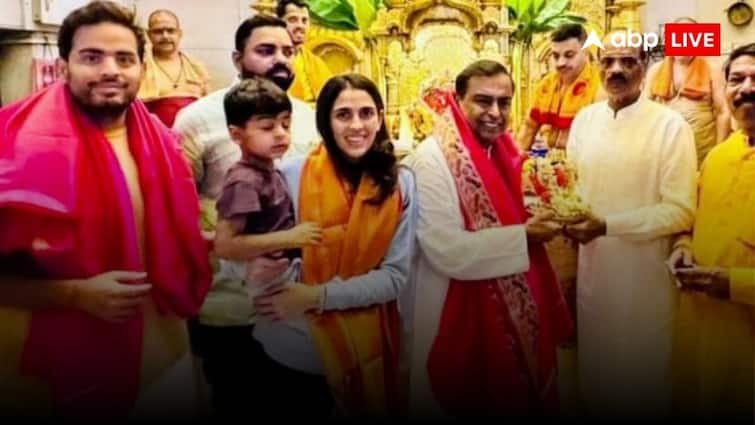
mukesh ambani reached Siddhivinayak Temple with akash ambani shloka ambani prithvi ambani

[ad_1]

Mukesh Ambani in Siddhivinayak: रिलायंस इंडस्ट्रीज (Reliance Industries) के चेयरमैन मुकेश अंबानी (Mukesh Ambani) ने रविवार को मुंबई के मशहूर सिद्धिविनायक मंदिर (Siddhivinayak Temple) में दर्शन किए. वह अपने परिवार (Ambani Family) के कई सदस्यों के साथ गणपति बप्पा के दर्शन करने पहुंचे थे. देश के सबसे रईस शख्स मुकेश अंबानी के साथ उनके बड़े बेटे आकाश अंबानी (Akash Ambani), उनकी पत्नी श्लोका अंबानी (Shloka Ambani) और उनका बेटा पृथ्वी अंबानी (Prithvi Ambani) भी मौजूद थे. इन सभी ने वहां गणपति बप्पा का आशीर्वाद लिया और सभी की सुख-शांति की प्रार्थना की. 


रामलला की प्राण प्रतिष्ठा के कार्यक्रम में भी पहुंचे थे सपरिवार 

मुकेश अंबानी धार्मिक प्रवृत्ति के व्यक्ति हैं. हाल ही में 22 जनवरी को अयोध्या में राम मंदिर में रामलला की प्राण प्रतिष्ठा के कार्यक्रम में भी वह अपनी पत्नी नीता अंबानी और परिवार के कई सदस्यों को लेकर पहुंचे थे. कार्यक्रम के दौरान सभी बहुत प्रसन्न दिखाई दिए थे. इसके बाद उन्होंने बड़े दान का भी ऐलान किया था. प्राण प्रतिष्ठा कार्यक्रम से पहले उन्होंने अपने घर एंटीलिया (Antilia) पर भी लाइट से जय श्रीराम का नारा लिखा था, जो कि काफी सुंदर था और दूर-दूर से दिखाई दे रहा था.

इंस्टाग्राम पर शेयर हुई अंबानी फैमिली की फोटो

मुकेश अंबानी के सिद्धिविनायक मंदिर जाने की जानकारी सोशल मीडिया पर भी आ गई. इंस्टाग्राम पर एक यूजर ने मंदिर में मौजूद परिवार की एक फोटो भी शेयर की. लोगों ने उस पर रोचक कमेंट भी किए हैं. एक यूजर ने लिखा वह भगवान से कह रहे हैं कि मेरे पास करोड़ों रुपये हैं. ये मैं किसको भेजूं. हाल ही में है फोर्ब्स बिलेनियर लिस्ट 2024 में मुकेश अंबानी को देश का सबसे रईस इंसान और दुनिया का 11वां सबसे दौलतमंद शख्स करार दिया गया था.   

ये भी पढ़ें 

मेट्रो ने एक झटके में बढ़ा दिया किराया, इस शहर में महंगा हुआ रोज का सफर


[ad_2]